Federal Commonwealth of Aquita
Overview
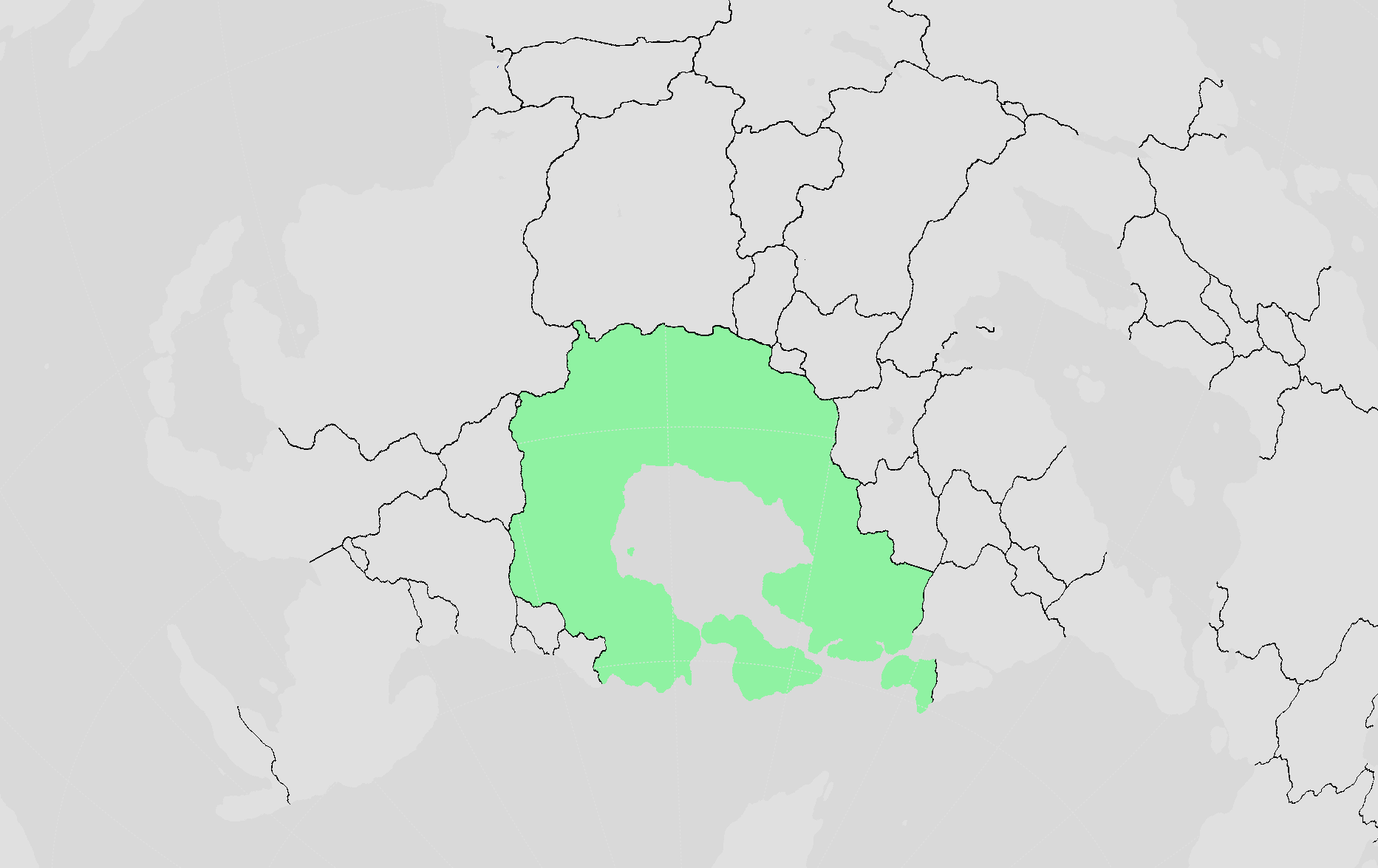
The Federal Commonwealth of Aquita, commonly known as Aquita, is a nation situated along the Gurnee Bay in South Enequit. Founded in 564 as the Kingdom of Aquita, Aquita has been a nation for 1463 years. Aquita as of 2027 is a parliamentary democracy under Prime Minister Joseph Alburg. Currently, the nation has 8 provinces, along with various island territories in the north. As of current year, the nation is home to 247 million citizens. The nations capitol being Ashrend located in the Atred Peninsula. The nation has a social market economy, in which the government regulates often.
Aquita occupies a strategically significant position along the Gurnee Bay, with extensive coastlines that have historically supported maritime trade, naval power, and dense urban settlement. The Atred Peninsula, where the capital Ashrend is located, functions as both a political and economic core, hosting major ports, government institutions, and financial centers. Inland regions are more sparsely populated and are characterized by mixed agricultural and industrial development.
The modern Aquitan state is organized as a federal commonwealth, with political authority shared between the national government and its eight provinces. Provincial governments retain responsibility over education, local infrastructure, and cultural affairs, while defense, foreign relations, monetary policy, and national regulation are handled at the federal level. Island territories in the north are administered under special statutes reflecting their geographic isolation and strategic importance.
Aquita’s parliamentary system is headed by a prime minister, who serves as head of government and is accountable to the national legislature. Executive authority is exercised through a cabinet drawn from the legislature, while a ceremonial head of state fulfills constitutional and representational duties. The political system emphasizes coalition governance and proportional representation, contributing to a multi-party landscape.
The Aquitan economy operates under a social market framework, combining private enterprise with extensive government regulation and public services. Key sectors include maritime trade, manufacturing, energy, and financial services, with the state playing an active role in labor protections, price stabilization, and infrastructure investment. Public ownership remains significant in strategic industries, particularly transportation and energy.
With a population of approximately 247 million, Aquita ranks among the most populous nations in South Enequit. Urbanization is concentrated along the Gurnee Bay coastline and the Atred Peninsula, while rural provinces maintain lower population densities. Demographic policy emphasizes social welfare, housing access, and regional development to balance growth across the commonwealth.
Internationally, Aquita is regarded as a longstanding regional power with deep historical continuity. Its long national history, stable political institutions, and regulated economic model have contributed to its reputation as a durable and administratively cohesive state within Enequit affairs.
Etymology
History
The history of the Federal Commonwealth of Aquita spans more than fourteen centuries, evolving from a centralized monarchy into a modern parliamentary democracy. Aquita’s long continuity as a state, combined with periods of foreign domination and national revival, has strongly shaped its political culture and regional role in South Enequit.
Kingdom of Aquita (564–early modern period)
Aquita was founded in 564 as the Kingdom of Aquita, centered on the Gurnee Bay and the Atred Peninsula. Its early power derived from maritime trade, fishing, and control of coastal routes linking northern and southern Enequit. Ashrend emerged as a royal seat and major port, benefiting from its defensible island position and access to deep-water harbors.
Throughout the medieval period, Aquita functioned as a centralized monarchy supported by a landed nobility and a growing merchant class. The crown gradually expanded authority over surrounding coastal territories and islands, integrating them through fealty, trade privileges, and naval protection. Aquitan fleets played a central role in suppressing piracy and securing regional commerce.
Early conflicts and regional wars
From the late medieval era onward, Aquita was repeatedly drawn into regional conflicts over trade dominance, naval access, and influence in South Enequit. These wars strengthened Aquita’s military institutions and reinforced the strategic importance of the Gurnee Bay. Although territorial gains were limited, Aquita established itself as a durable regional power with a professional navy and standing army.
By the early modern period, pressures from industrialization, population growth, and political reform movements began to challenge absolute monarchy. Gradual constitutional changes reduced royal authority and expanded representative institutions, setting the stage for later political transformation.
The Colonial Era
Aquita emerged as one the major colonial powers during the colonial era. At its greatest extent, Aquita owned colonies in Lucithia, Veronia, and Mancha. The colonies were used to expand Aquitan trade overseas with neighboring nations, using the Cotresha in Lucithia to expand trait with Oytaria.
The Enequit Wars and occupation
Aquita’s most disruptive period occurred during the Enequit Wars, when the nation was invaded and occupied by Entara and Glaria. The monarchy collapsed under military defeat, and Aquita was placed under external administration. Industry, ports, and infrastructure were repurposed for the occupiers’ war efforts, while political institutions were dismantled or subordinated.
Despite occupation, organized resistance emerged across both the mainland provinces and the northern island territories. Resistance networks conducted sabotage, intelligence gathering, and clandestine logistics, often using Aquita’s complex coastline and peninsulas to evade control. These movements became central to Aquitan national memory and postwar identity.
Liberation and the Great World War
Aquita was liberated toward the end of the Great World War (GWW). Coordinated resistance actions, combined with advancing allied forces, accelerated the collapse of occupation. Liberation was followed by widespread reconstruction, political reckoning, and the prosecution of collaborators.
The monarchy was formally abolished in the postwar settlement, and Aquita was made fully as a federal commonwealth. A new constitutional framework expanded the established parliamentary democracy, expanded civil rights, and reorganized the state into provinces with defined autonomy. The resistance movement was formally recognized as a foundational element of the modern Aquitan state.
Postwar consolidation and modernization
In the decades following liberation, Aquita pursued economic reconstruction through a social market model combining private enterprise with strong government regulation. Nationalization of key infrastructure, labor protections, and public welfare systems became central to governance. The capital Ashrend was rebuilt as a modern administrative and financial center.
Politically, Aquita aligned itself with regional and international institutions, emphasizing collective security, economic cooperation, and postwar reconciliation. Federalism was strengthened to balance national unity with regional governance.
Contemporary period
In the contemporary era, Aquita functions as a parliamentary democracy within a federal commonwealth structure. It maintains active involvement in regional security, trade, and diplomatic initiatives, drawing on its historical experience of occupation and liberation to inform foreign policy.
Aquita’s long statehood, combined with the legacy of resistance and postwar reform, has produced a political culture that emphasizes institutional stability, social cohesion, and cautious international engagement. The nation continues to play a significant role in South Enequit affairs while maintaining strong domestic governance traditions.
Economy
Aquita has a social market economy, which is regularly monitored by Aquitan officials. Aquita has lots of internal businesses, and also has a large exportation economy. Aquita stands as the 4th richest nation on the planet by GDP, with a GDP of 12.2 trillion dollars (As of 2027), and is one of the world's largest goods exporters and importers. Some of the nation’s main exports are oil, fish, iron, potash, and kaolin. The Aquitan Doe, minted in 1387 by the Aquitan monarchy at the time, is the main currency of Aquita, with the Aurel coins being 10% of one Doe, and one Aursh being 1% of one Doe. 1 Aquitan Doe is equal to 1.14 CIV. The Doe is the official currency in Aquita, is a secondary currency in several post Aquita territories, and Leland.
Tourism
With an estimated 105 million tourists in 2026, Aquita is the world's fourth highest tourist destination, and ranks 4th in tourist income. The most popular destinations include the Aquitan World Financial Center in Ashrend, Gurnee Bay Pier, Centrique Tower, Milibu Tower, and Stylus Tower.
Aquita, especially Ashrend, has some of the world's largest museums in the world, notably museums such as The Ashrend National Museum and Institue of Fine Arts Ashrend.
Energy
Aquita is the world's 5th largest energy producers. The Aquitan Depertmant of Electricity and Energy is the largest government owned energy program in Aquita, producing most of the nations energy and is one of the largest energy producers in the world. The ADEE produces a large portion of Enequit's energy, mostly using Nuclear Power to do so with plants in Milibu, Ashrend, Calivonia, Whettensburg, and more.
Because losses of energy somewhat contributed to the loss of Aquita during the Enequit Wars, the nation has since put more emphasis on energy security and backups, putting a lot of research into nuclear energy and less polluting ways of energy, ranking 3rd in the use of nuclear energy per capita. Modern day, around 79% of Aquita's energy production is done by nuclear powerplants, one of the highest in Enequit and the world. Aquita is considered one the world's powers in nuclear energy and exportation.
Despite the high reliance of nuclear power, Aquita and the ADEE are adopting newer and renewable sources of energy, maining using hydroelectricity via the use of the Gurnee Bay. Contributing a solid 9% of Enequits energy using hydroelectricity, it is becoming more used and plans of more hydropower are in development for Enequit and Aquita.
Geography
Aquita's territory is all located in Southern Enequit, with the exception of the Teguzi Isles and islands off the coast of Veronia. It is bordered by the Gurnee Bay in the south, which is the only body of water nearby. It's land borders consists of Jusnia, Kenessa, Nautfranken, Polsha, Qoriar, Entara, Clara, Morgana, Farchinua, Boudesia, Patisburg, Thale, and Hetepolen. Most of the borders are made with natural geographic borders, with the Gurnee coastline in the south and Caali Mountain range.
Demographics
Major Cities
Aquita is one of the most urbanised nations on Aron, with the largest cities being Ashrend, Milibu, Marrington, Lumington, and Oscrumen. It's provinces are densly populated, with Argouna being the most populated province of the nation, being home to the capital of Ashrend.
Immigration
It is estimated the around 35% of Aquita's population is descended from immigrants. The largest wave came in 1950, soon after liberation and colonial indepence from old Aquitan colonies. Multiple groups of immigrants also came from places like Entara and Leland.
Aquita today is still a large destination for immigrants, mainly from Enequit. It is Southern Enequit's highest destination for immigrants, with around 110,000 applications between 2025 to 2026. Each subsequent year results in more and more immigrants coming to the nation, moving from 63,000 in 2015 to 68,000 in 2016.
Language
The offical language of Aquita is Aquilese, an Enquish language derived from ancient Enequit languages. Since 1228, the Aquitan Institue of Language has been the offical authority of the Aquilese language, yet the Institue has no offical connection to the federal government. Although it is the first language of Aquita, many neighboring nations also have Aquilese as an offical language, and many regional languages are branches of Aquilese.
The federal government does not regulate the use of the Aquilese language, yet it is mandatory that it is used to a degree in office, industrial, and commercial workplaces. There are about 41 vernaculer languages, 26 spoken in mainland Aquita, and 15 in post colonial territores and countries.
Of Aquita's 247 million people population, the AIL reported that 77% of Aquitan citizen spoke Aquilese as a first language, with 84% of citizens reportedly being bilingual, majority also speaking Kifhase.
Health and Healthcare
The Aquitan Healthcare System is one of universal health care financed by the federal health insurance and state governments. In 2019, it is estimated that 13.7% of the Aquitan GDP is spent on healthcare, one the highest in Enequit and very high in the world. About 65% of healthcare costs are covered by the government agencies.
Certain illness are regarded for free treatment by the Aquitan government. Life expentency in Aquita is the highest in the world, with 85 years for mean and 87 for women. On average, there are about 5.1 physicians per 1000 patients, 6.3 beds per 1000 patients.
Education
With the first instinces of schooling emerging in the 1700's, with the father of Aquitan education being considered as Lawerence Glunsven Haldsish, schooling has been required ever since 1807. Modern Aquitan schooling is considered to have started with the reforms done by Irwin van Queenslent to modernize the education system, establishing the modern education system.
Aquitan Education is established as three systems, Primary, Secondary, and Tertiary levels. The worldwide student education organization ranked the Aquitan education system as above average compared to other countries. The Aquitan government is also pushing for more technological programs installed in schools, as they believe it is necessary for the future.
Education for students is implimented to be required to take minimum 13 years of education for a secondary school diploma, requiring years 5 to 11 to partake in primary school, and ages 12 to 18
Politics
Government
The executive branch is led by the Prime Minister of Aquita, who is the head of the party with the most members in the legislature parliament. The current prime minister is Joseph Alburg, who is the head of government. The second in command is chancellor, who is the commander in chief of the armed forces, and is second in command to the prime minister. The chancellor is elected by the leading parties members, with the requirement of minimum five years of military service in order to become appointed. The prime minister has the abilites of being able to dissolve legislations made by the parliament by holding referendums to the citizens. The prime ministers main purpose is to handle public policy, civil service, and domestic and international affairs.
Provinces and Territories
Aquita is a federal commonwealth composed off nine separate provinces, along with the Teguzi Islands in the Encarie Ocean and Aquitan Melv Islands. These provinces are split up into four sections, Western Aquita, Central Aquita, Eastern Aquita, and South Aquita. Province governments have control over local and provincial laws, education, social programs, infrastructure, and province level justice. The nine provinces include Kelmien, Marisella, Lumez, Richiellou, Slavvil, Lliobu, Onam, Folund, and Argouna. Aquita is divided up in 419 departments, with separate numerical codes for postal and regional use. The 419 departments are turned into 683 parliamentary voting districts.
The Teguzi Islands are a separated administrated Aquitan territory in the Encarie Ocean, south of Mancha, that operate in a different way to the mainland provinces, being under more federal control rather than provincial. Provinces get their power delegated from the Aquitan parliament. As stated in the Federal vs. Provincial article of 1946, Provinces have their own powers seperate from the federal government, despite the federal government being the highest authority in the land. Any power desputes are put up to the Aquitan parliament.
Military
The Royal Armed Forces of Aquita consist of three brances, the Royal Navy of the Republic, consisting of the Navy, Coast Guard, and Marines, the Royal Aquitan Army, and the Aquitan Air Force. The Royal Armed Forces are controller by the Aquitan Defence Administration. The commander in chief is the Chancellor of Aquita, who is required 5 years of service in the Armed Forces to become chancellor.
The Royal Armed Forces are charged with protecting the homeland of Aquita, including the Teguzi Islands, promoting international peace efforts and global security. Aquita is a active member in multiple alliances like ADA, as well as other defense administrations. Overseasd garrisons are managed in Entara, Melv, Leland, as well as other old colonial territories. According to worldwide data, Aquita has the 11th largest military spendings, with the defense administration stating that 1.9 percent of the Aquitan GDP is spent on defence.
Redirects